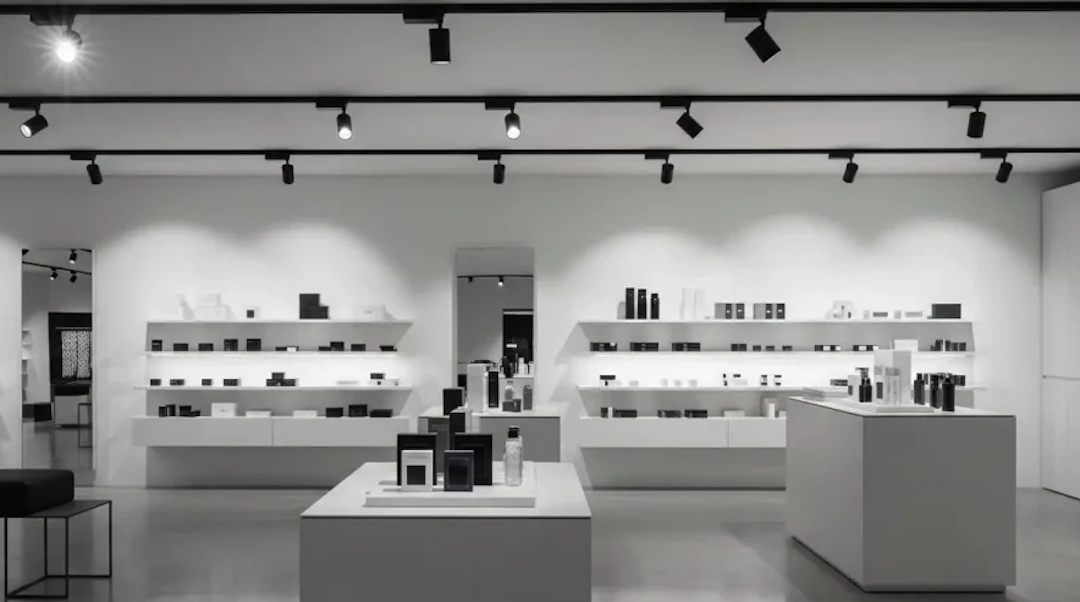
So, you’re wondering if track lighting can really jazz up your retail space? The short answer is a resounding yes. Flexible track lighting, in particular, offers a level of adaptability that traditional lighting just can’t match. It’s not just about brighter lights; it’s about strategically highlighting products, creating an inviting atmosphere, and ultimately, boosting sales. Think of it as a tool that allows you to sculpt light around your merchandise, making it look its best, no matter how often your displays change.
Flexible track lighting isn’t just a trend; it’s a smart investment for any retail environment. Its core advantage lies in its namesake: flexibility. Unlike fixed lighting, track lighting Simiglighting allows you to reposition, add, or remove fixtures with relative ease. This adaptability is crucial in a retail setting where product layouts and promotions are constantly evolving.
By being able to direct light precisely where it’s needed, you prevent dark spots and ensure every product gets its moment in the spotlight. This isn’t just about aesthetics; it’s about making your merchandise more visible and appealing to customers. When products are well-lit, they naturally draw attention and appear more desirable.
Moreover, the sheer variety of fixtures available for track systems means you can achieve different lighting effects, from broad washes of light to focused spotlights. This versatility empowers retailers to create dynamic and engaging displays that can be updated for seasons, sales, or new arrivals, all without the need for costly electrical rewiring. It’s about working smarter, not harder, to create an impactful shopping experience.
The Power of Adaptability in a Dynamic Retail Environment
Retail isn’t static. Merchandise comes and goes, promotions shift, and even the layout of your store might change to accommodate new strategies or seasonal themes. This constant flux is where flexible track lighting truly shines. Imagine trying to achieve optimal lighting with fixed ceiling lights when your seasonal display moves from the front window to the back wall. It’s a headache, right? With track lighting, you simply slide the fixtures to their new positions, adjust their direction, and voila – instant, optimal illumination for your fresh setup.
This adaptability extends beyond just moving lights. You can easily add more fixtures if you’re expanding a product line or need extra illumination for a new display. Conversely, if you’re consolidating, you can remove unneeded fixtures. This ease of modification means your lighting system grows and evolves with your business, rather than becoming an outdated, inefficient fixture that hinders your merchandising efforts. It gives you a nimble edge in a competitive market, allowing for quick adjustments that keep your store looking fresh and appealing without significant downtime or expense.
Enhancing Product Visibility and Appeal
At its core, retail is about presenting products in the best possible light, both literally and figuratively. Flexible track lighting directly contributes to this by elevating product visibility and appeal. Think about a high-end jewelry store versus a dimly lit convenience store – the difference in how the products are perceived is immense, largely due to lighting.
With track lighting, you’re not just throwing light generally across the store. You’re sculpting it. This means you can use narrow beam spotlights to highlight the intricate details of a watch, or a broader floodlight to illuminate a clothing display evenly. When products are clearly visible and well-defined by light, they become more attractive and appear to be of higher quality. This isn’t just an assumption; studies have shown that good lighting can significantly impact purchasing decisions. Customers are more likely to notice, examine, and ultimately purchase items that are properly lit, making flexible track lighting a direct contributor to your bottom line.
Cost-Effectiveness Through Modularity
While the initial investment in a track lighting system might seem comparable to other options, its long-term cost-effectiveness is a significant advantage. The modular nature of track lighting is key here. You’re not locked into a fixed setup. If a fixture breaks, you replace just that one fixture, not an entire overhead panel. If you decide to update your look, you can swap out individual lamp heads for newer styles or different beam angles without touching the entire track system.
Moreover, as lighting technology evolves (and it evolves rapidly!), you’re not stuck with outdated energy-inefficient bulbs. You can easily upgrade to more efficient LED fixtures as they become available, further reducing your energy bills. This ability to incrementally upgrade and maintain your lighting system means you avoid large, disruptive, and expensive overhauls down the line, making flexible track lighting a truly economical choice for dynamic retail environments.
The Different Types of Flexible Track Lighting Systems
When we talk about “flexible track lighting,” it’s important to understand that there isn’t just one type. The term encompasses several systems, each with its own nuances regarding installation, power capacity, and fixture compatibility. Understanding these differences will help you choose the best system for your specific retail needs and budget.
The main distinction often comes down to voltage and the physical design of the track itself. Low-voltage systems offer different benefits compared to line-voltage systems, and within those, you have different track configurations like single-circuit, dual-circuit, and even recessed options. Each has a specific role to play in achieving the desired lighting effect and functionality for your retail space.
Line-Voltage vs. Low-Voltage Tracks
This is one of the foundational distinctions in track lighting. Understanding the difference between line-voltage and low-voltage systems is crucial for both performance and safety.
Line-voltage systems are the most common and operate at the standard household voltage (typically 120V in North America, 230V in Europe). This means they connect directly to your building’s existing electrical wiring.
- Pros of Line-Voltage:
- Simple Installation: No need for transformers, as they connect directly.
- Higher Wattage Capacity: Can support higher-wattage bulbs, which might be useful for brighter overall illumination or longer throws of light.
- Wider Fixture Availability: A vast array of fixtures and bulb types are available, offering more choice in aesthetics and functionality.
- Cost-Effective per Fixture: Generally, individual line-voltage fixtures are less expensive than their low-voltage counterparts.
- Cons of Line-Voltage:
- Less Energy Efficient (Historically): While modern LED line-voltage bulbs are very efficient, historically, they could consume more energy than low-voltage alternatives.
- More Heat Generation: Higher wattage can mean more heat, which might be a concern in enclosed displays or for sensitive merchandise.
- Larger Fixtures: The fixtures themselves can sometimes be bulkier due to housing the necessary electrical components.
Low-voltage systems (typically 12V or 24V) require a transformer to step down the standard line voltage. The transformer can be integrated into the track itself, built into individual fixtures, or installed remotely.
- Pros of Low-Voltage:
- More Energy Efficient (Often): Low-voltage bulbs, especially halogens, were historically more efficient than their line-voltage counterparts. With LEDs, the efficiency gap has narrowed significantly.
- Smaller, More Discreet Fixtures: The fixtures can be much smaller and more aesthetically refined because they don’t need to house bulky transformers. This is excellent for creating a minimalist look.
- More Focused Beams: Often associated with more precise beam control, ideal for highlighting specific details.
- Safer (Lower Voltage): Less risk of electrical shock if touched, making them potentially safer in public areas, though any electrical installation should be done by a professional.
- Less Heat Emission: Generates less heat, which is beneficial for heat-sensitive products like fresh food, cosmetics, or artwork.
- Cons of Low-Voltage:
- Requires Transformers: Adds an extra component to the system, which can complicate installation and add to the overall cost.
- Limited Run Lengths: The maximum run length can be limited by voltage drop, which can cause dimming over long distances unless properly accounted for.
- Fewer Lumen Output Options (Historically): While modern low-voltage LEDs are very bright, historically, achieving very high lumen output was challenging.
- Higher Initial Cost (Often): Transformers and specialized low-voltage fixtures can increase the upfront cost.
For most general retail applications, line-voltage systems offer a robust and versatile solution due to their simplicity and wide array of available fixtures. However, if you need highly precise spot lighting for delicate merchandise, or desire a very discreet, minimalist lighting setup, low-voltage can be an excellent choice. It’s often a balance between upfront cost, aesthetic preference, and specific lighting requirements.
Single-Circuit vs. Dual-Circuit Tracks
Beyond voltage, the internal wiring of the track itself plays a significant role in how you can control your lighting. The distinction here is between single-circuit and dual-circuit (or multi-circuit) tracks.
Single-Circuit Tracks:
- What it is: These tracks have one continuous electrical circuit running through them. All fixtures connected to this track are controlled by a single switch.
- Pros:
- Simpler Installation: Less complex wiring.
- Cost-Effective: Generally cheaper to purchase and install.
- Ideal for Uniform Lighting: If you want all the lights on a particular track to come on and off simultaneously, this is the straightforward option.
- Cons:
- Limited Control: You can’t dim or switch groups of lights independently on a single track. All lights are controlled as one unit.
- Less Versatility: Not suitable for creating layered lighting effects where different areas need different levels of illumination or to be turned on/off separately.
Dual-Circuit (or Multi-Circuit) Tracks:
- What it is: These tracks contain two or more separate electrical circuits. This allows you to control different groups of fixtures on the same track independently using separate switches or dimmers. For example, you could have one circuit for general ambient lighting and another for accent lighting, all on the same track.
- Pros:
- Enhanced Control: Provides much greater flexibility in lighting design. You can highlight different product displays, create varying moods, or turn off general lighting while keeping accent lighting on for security or after-hours ambiance.
- Dynamic Lighting Scenes: Allows for the creation of more sophisticated lighting effects and scenes.
- Energy Savings: Can save energy by only illuminating specific areas when needed.
- Cons:
- More Complex Installation: Requires more wiring and potentially more switches.
- Higher Initial Cost: Track and fixtures designed for multi-circuit systems are typically more expensive.
- Fewer Fixture Options (Sometimes): While many fixtures are compatible, some specialized fixtures might be limited to single-circuit compatibility.
Practical Application: In a retail setting, dual-circuit tracks are often preferred because they offer the dynamic control needed for merchandising. Imagine being able to turn off the general display lighting but keep the spotlights on mannequins or high-value items even after closing, or being able to dim track fixtures over a certain product category during a promotion. This level of control optimizes energy usage and enhances the overall customer experience by allowing for tailored lighting specific to each display’s needs.
Recessed and Surface-Mounted Tracks
The final common distinction for track lighting systems relates to how they are physically installed in or on the ceiling. This choice impacts both the aesthetics of your space and the ease of installation.
Surface-Mounted Tracks:
- What it is: These are the most common type, where the track rail is mounted directly onto the surface of the ceiling. It’s visible, often looking like a slim, linear metal strip.
- Pros:
- Simplest Installation: Does not require cutting into the ceiling, making it ideal for existing spaces or renovations where structural modifications are undesirable.
- Lower Installation Cost: Less labor involved compared to recessed options.
- Easy to Reposition: As the track is external, it’s easier to adjust or even relocate the entire track system if layouts drastically change.
- Visible Design Element: Can be a conscious part of the industrial or modern aesthetic of a retail space.
- Cons:
- More Visible: Some find the exposed track to be less aesthetically pleasing, especially in high-end or very traditional environments.
- Can Appear Bulky: Depending on the track profile, it can look somewhat obtrusive if not integrated well with the ceiling design.
Recessed Tracks:
- What it is: The track rail itself is installed into the ceiling, so it’s flush with the surface. Only the track head that holds the bulb extends below the ceiling line.
- Pros:
- Clean, Integrated Look: Offers a very sleek, minimalist aesthetic as the track virtually disappears into the ceiling.
- Sophisticated Appearance: Ideal for high-end retail spaces where a seamless and uncluttered ceiling is desired.
- Less Obtrusive: The focus shifts entirely to the light itself, not the fixture holding it.
- Cons:
- Complex Installation: Requires cutting into the ceiling and often involves more extensive framing work, leading to higher installation costs.
- Best for New Construction/Major Renos: While possible in existing spaces, it’s often more practical during new builds or significant ceiling renovations.
- Less Flexible for Relocation: Moving a recessed track system after installation is a major undertaking.
- Potential for Heat Trapping: Depending on insulation and ceiling structure, heat from fixtures could be a consideration, though less so with modern LEDs.
Practical Application: For most fast-paced, adaptable retail environments, surface-mounted tracks offer the best balance of flexibility, ease of installation, and cost. They allow for quick changes to product layouts without needing to disrupt the ceiling. However, for a boutique with a highly refined, permanent aesthetic, or a gallery-like retail space, recessed track lighting can provide an unparalleled level of sophistication and cleanliness, allowing the merchandise to truly shine without any optical distractions from the lighting infrastructure itself.
Strategic Placement: Optimizing Light for Impact
The beauty of flexible track lighting isn’t just that you can move the lights, but that you should move them. Strategic placement is where your lighting design truly blossoms, transforming your retail space from merely illuminated to captivating. It’s about thinking like a photographer, using light to draw the eye, create depth, and highlight texture and color.
Simply adding track lighting without a plan is like buying high-tech cooking gear and only making toast. To truly leverage its power, you need to understand the principles of effective lighting design for retail. This involves considering the types of products you sell, the flow of customer traffic, and the overall ambiance you want to create. It’s about making deliberate choices that guide the customer’s gaze and enhance their perception of your merchandise.
Highlighting Key Displays and Promotions
Every retail store has its star performers: new arrivals, seasonal promotions, high-margin items, or products on sale. These “heroes” deserve special attention, and track lighting is your perfect tool for providing it. Instead of a general wash of light that treats all products equally, track lighting allows you to create focused illumination that screams, “Look at me!”
- Focused Spotlights: Use narrow-beam fixtures to create a strong contrast, making an item pop against its surroundings. This is particularly effective for jewelry, electronics, or designer clothing. The intensity of the light draws the eye directly to the product.
- Defining Boundaries: Use a series of closely spaced fixtures to create a “wall of light” around a promotional area. This visually separates it from other displays, signaling its importance to the customer.
- Adjusting for Change: When a new promotion starts or an old one ends, you don’t need to call an electrician. Simply slide the fixtures along the track, re-aim them, and adjust the intensity (if using dimmable bulbs). This agility means your lighting can always keep pace with your merchandising strategy.
- Layering Light: Combine broader floodlights for overall illumination of a promotional zone with tighter spots for the absolute star products within that zone. This creates depth and visual interest.
By strategically highlighting your key displays, you’re not just making them brighter; you’re communicating their value and urgency to the customer, driving engagement and sales where it matters most.
Guiding Customer Flow with Light
Lighting isn’t just for displays; it’s a powerful, often subconscious, tool for guiding customers through your store. Just as a path leads you, light can subtly direct shoppers to areas you want them to explore, influencing their journey and increasing their exposure to more products.
- Creating “Landing Strips”: Use strategically placed track lights to illuminate a clear path from the store entrance to key departments or feature displays. Brighter areas naturally draw the eye and encourage people to move toward them.
- Defining Zones: In a large retail space, different “zones” can be illuminated with varying light levels or color temperatures. For example, a brighter, cooler light might define an active sales area, while a warmer, slightly dimmer light might signal a more relaxed, browsing-oriented section like a lounge area or fitting rooms.
- Highlighting Entrances and Exits: Ensure entrances are welcoming and well-lit, drawing people in. Similarly, clearly lighting the path to checkout areas can reduce friction and make the purchasing process smoother.
- Drawing Attention Around Corners: Use a series of track lights to beckon customers around a corner or into an aisle they might otherwise overlook. The promise of light usually implies something interesting is ahead.
By consciously using light to direct customers, you’re not leaving their journey to chance. You’re crafting an experience that maximizes their exposure to your merchandise and encourages them to discover more of what your store has to offer.
Enhancing Ambient and Accent Lighting
A truly effective retail lighting scheme isn’t just about blasting products with light. It’s a carefully orchestrated blend of ambient and accent lighting, and flexible track systems excel at providing both.
Ambient Lighting: This is the general, overall illumination of your space. Its purpose is to provide sufficient light for visibility and to create a comfortable, inviting atmosphere.
- With Track Lighting: Instead of relying solely on overhead recessed fixtures, track lighting can provide excellent ambient light. Use fixtures with wider beam angles or flood/wash characteristics. You can aim them at the ceiling for indirect light, or use them to broadly illuminate large sections of the store.
- Uniformity and Warmth: Aim for a consistent level of general brightness throughout the store, with a color temperature (measured in Kelvin) that aligns with your brand. Warmer temperatures (around 2700-3000K) create a cozy, intimate feel, often suited for clothing or home goods. Cooler temperatures (3500-4000K) feel crisper and more modern, good for electronics or activewear.
Accent Lighting: This is the focused light used to highlight specific items, displays, or architectural features. It adds drama, creates focal points, and makes products “pop.”
- The Track Advantage: This is where flexible track lighting truly shines. Using narrow-beam spotlights, you can pinpoint individual items, creating shadows and contrast that add depth and texture.
- Ratio Matters: A good rule of thumb is an accent-to-ambient ratio of 3:1 or even 5:1 for high-impact displays. This means the focal point should be significantly brighter than the surrounding ambient light. This contrast is what draws the eye.
- Creating Depth: Aiming lights at different angles can create shadows that give merchandise a three-dimensional quality, making it appear more substantial and appealing.
- Changing Focus: As your merchandise changes, your accent lighting can change with it. A fixture highlighting a mannequin one week can be slid down the track and redirected to a new promotional table the next.
By skillfully blending ambient and accent lighting using your flexible track system, you create a dynamic and engaging environment. Customers feel comfortable (ambient light) but their attention is constantly drawn to the most important products (accent lighting), leading to a more effective and enjoyable shopping experience.
Bulb Selection: More Than Just Brightness
Choosing the right bulb for your track lighting system is just as crucial as the placement of the fixtures. It’s not simply about how bright the bulb is; it’s about the quality of that light, its color, and its efficiency. The right bulb can make your products look vibrant and true-to-life, while the wrong one can make them appear dull or even miscolored.
With the rapid evolution of lighting technology, especially with LEDs, there’s a wide array of choices. Understanding terms like color temperature, color rendering index, and beam spread will empower you to make informed decisions that genuinely enhance your retail displays, rather than just illuminating them. Investing a little time in understanding these aspects will pay dividends in how your merchandise is perceived by your customers.
Understanding Color Temperature (CCT)
Color Temperature, measured in Kelvin (K), describes the warmth or coolness of the light emitted by a bulb. It’s not about the physical temperature of the bulb, but rather the hue of the white light. This is a crucial factor in retail because it significantly impacts the mood of your store and how your products are perceived.
- Warm White (2700K – 3000K):
- Appearance: Soft white, yellowish glow, similar to incandescent bulbs.
- Feeling: Cozy, inviting, intimate, comfortable, traditional.
- Best For: Clothing boutiques (especially natural fibers), cafes, bakeries, bookstores, home goods, antique stores, high-end jewelry (to enhance gold tones). It can make skin tones look healthier and food appear more appetizing.
- Neutral White / Cool White (3500K – 4000K):
- Appearance: Brighter white, less yellow, sometimes with a very subtle blue tint.
- Feeling: Clean, crisp, energetic, modern, professional.
- Best For: General retail spaces, offices, showrooms, electronics stores, supermarkets produce sections, activewear, and contemporary fashion. It offers good visibility without being overly stark.
- Daylight / Cool Daylight (5000K – 6500K):
- Appearance: Bluish-white, mimic natural daylight.
- Feeling: Very alert, stark, clinical, intense.
- Best For: Jewelry (to make diamonds sparkle, though can clash with gold), art galleries (for true color representation), industrial settings, graphic design studios, areas requiring high levels of detailed work. Generally considered too harsh for general retail ambiance, but can be effective for specific product highlights.
Retail Application: The key is consistency and purpose. You might use different CCTs in different zones of your store (e.g., warmer in a seating area, cooler in an electronics section). However, within a display, consistency is often best to avoid visual jarring. For most fashion and general merchandise, 3000K-3500K is a safe and versatile choice, providing warmth without sacrificing clarity. For specific items like jewelry, experimenting is key – a slightly warmer light can enhance gold, while a very cool, almost bluish light might make silver and diamonds sparkle intensely, but can also make warmer tones look dull. Choose a CCT that complements your merchandise and brand aesthetic.
The Importance of Color Rendering Index (CRI)
While Color Temperature dictates the hue of your white light, the Color Rendering Index (CRI) tells you how faithfully that light reveals the true colors of objects compared to natural daylight. This is an absolutely critical factor in retail, especially for products where color accuracy matters, like clothing, cosmetics, art, or food.
CRI is measured on a scale from 0 to 100.
- CRI of 100: Indicates perfect color rendering, like natural sunlight.
- CRI of 80+: Generally considered good and acceptable for most commercial and residential applications.
- CRI of 90+ (High CRI): Excellent color rendering. Colors appear vibrant, rich, and true-to-life, with subtle nuances clearly visible.
Why High CRI Matters in Retail:
- Accurate Product Representation: Imagine a customer trying on a sweater in your store. If your lighting has a low CRI, the color might look different under the store lights than it does in natural daylight or in their home. This can lead to disappointment, returns, and a loss of trust. High CRI ensures that the “red” sweater they see in the store is truly red, not a muted or shifted version.
- Enhanced Appeal: Products, especially those with intricate designs, various textures, or subtle color variations, simply look better under high CRI lighting. Fabrics look richer, produce looks fresher, and cosmetic shades are clearly distinguishable.
- Reduced Returns: By ensuring customers see the true color of an item, you significantly reduce the chances of them returning it because “the color was different at home.”
- Brand Perception: Stores that invest in high CRI lighting often convey a sense of quality, attention to detail, and a premium shopping experience.
Practical Tips:
- Aim for CRI 90+: For retail environments where color is important (which is nearly all of them!), prioritize bulbs with a CRI of 90 or higher. While they might be slightly more expensive, the benefits in terms of customer satisfaction and reduced returns far outweigh the cost.
- Be Mindful of Budget: If a CRI of 90+ isn’t feasible for every single fixture, prioritize it for key display areas, fitting rooms (crucial for clothing sales!), and areas where product details are paramount.
- Specialized High-CRI Solutions: Some LED manufacturers offer specialized high-CRI bulbs tuned for specific applications, such as “meat lighting” (to make red meats look vibrant) or “bakery lighting” (to enhance golden crusts).
Don’t underestimate CRI. It’s often overlooked in favor of brightness or cost, but it’s a foundational element of effective retail lighting that directly impacts customer perception and ultimately, sales.
Beam Spread: Directing the Focus
Beam spread (or beam angle) refers to how wide or narrow the cone of light is that a bulb emits. It’s measured in degrees and determines whether your light fixture is illuminating a broad area or a very specific spot. Understanding and utilizing different beam spreads is key to creating dynamic and effective retail displays with track lighting.
- Narrow Beam / Spot (typically <20 degrees):
- Appearance: A tight, focused beam of light.
- Purpose: Ideal for highlighting individual products, small details, or creating dramatic accents. It draws immediate attention to a single item.
- Application: Jewelry displays, a single high-value apparel item on a mannequin, artwork, specific architectural features. Creates strong contrast and shadows.
- Medium Beam / Flood (typically 20-40 degrees):
- Appearance: A wider, but still somewhat defined, cone of light.
- Purpose: Good for illuminating small to medium-sized displays or a cluster of related products. Provides more uniform light across a small area than a spot.
- Application: Small merchandise tables, individual shelves, focal points in a window display. It’s a versatile choice for many general accent lighting needs.
- Wide Beam / Wash (typically >40-60+ degrees):
- Appearance: A broad, diffuse spread of light.
- Purpose: Primarily used for general ambient lighting, illuminating larger sections of a wall, or washing an entire product category with light. Reduces harsh shadows.
- Application: Wall displays of clothing, entire shelves of products, general area illumination, or to soften harsh shadows created by spot lighting.
Strategic Use in Retail:
- Layering: The most effective lighting schemes use a combination of beam spreads. Start with a wide wash for ambient light in an area, then use medium floods for general display illumination, and finally, add narrow spots to highlight specific hero products. This layering creates depth and visual interest.
- Distance to Object: The closer the light source is to the object, the smaller the area illuminated, and the more intense the light will appear. Conversely, moving the light further away will spread the light over a larger area, reducing intensity. Factor this in when choosing beam angles.
- Preventing Glare: Be mindful of placing narrow spots too close to reflective surfaces, as this can create distracting glare for customers. Use wider beams or indirect lighting for highly reflective items if glare is an issue.
- Flexibility on the Fly: The beauty of track lighting is that you can easily swap out light bulbs with different beam spreads, or replace entire fixture heads, to quickly change the lighting effect for a new display simply by purchasing a bulb with a different beam angle. This capability saves significant time and effort.
Mastering beam spread allows you to precisely direct the customer’s eye, drawing attention to what matters most and creating visually compelling displays that make your products shine.
Installation and Maintenance Considerations
While flexible track lighting offers unparalleled adaptability, there are practical considerations around its installation and ongoing maintenance. Getting these right from the start ensures your system functions effectively, safely, and remains a cost-efficient asset for your business. It’s not a set-it-and-forget-it solution, but with a bit of planning and attention, it becomes a seamlessly integrated part of your retail operations.
Thinking about who will install it, what safety measures are needed, and how you’ll keep it running smoothly will save you headaches down the line. These aren’t complex hurdles, but they are essential parts of making the most of your investment.
Professional Installation for Safety and Performance
While flexible track lighting might seem straightforward to install, especially surface-mounted systems, it involves working with electricity. For safety, compliance with building codes, and optimal performance, professional installation is almost always recommended for a commercial retail space.
- Electrical Expertise: A licensed electrician understands local electrical codes, wiring requirements, and how to safely connect the track system to your building’s power supply. This prevents safety hazards like short circuits, fires, or electrical shocks.
- Load Balancing and Capacity: Retail spaces often have significant electrical demands. An electrician will ensure that the track lighting system doesn’t overload existing circuits and that power is distributed evenly. This is especially crucial for multi-circuit tracks.
- Proper Mounting and Alignment: Professional installers ensure the track is securely mounted to the ceiling or wall, perfectly level, and aligned. This prevents sagging, ensures fixtures slide smoothly, and contributes to a clean aesthetic.
- Warranty Compliance: Many track lighting manufacturers require professional installation for their product warranties to remain valid. Attempting a DIY installation could void your warranty.
- Time and Efficiency: While it might seem faster to do it yourself, a professional installer will complete the job efficiently and correctly the first time, minimizing disruption to your business operations.
Investing in professional installation is an investment in the safety of your staff and customers, the longevity of your lighting system, and the overall professional appearance of your retail environment.
Regular Cleaning and Bulb Replacement
Once your flexible track lighting is installed, a bit of regular attention goes a long way in maintaining its performance and appearance. This isn’t just about making things look good; it’s about ensuring your lighting continues to be effective in highlighting your merchandise.
- Cleaning the Track and Fixtures:
- Dust Buildup: Dust and grime can accumulate on the track, the light fixtures, and especially on the bulbs themselves. This dulls the light output and can make the fixtures look unkempt.
- Schedule: Depending on your store’s environment (e.g., dusty products like fabrics, high foot traffic), a weekly or bi-weekly light dusting of exposed fixtures and bulbs is recommended. A more thorough wipe-down with a damp (not wet!) cloth every month or two can keep everything sparkling.
- Safety First: Always turn off the power to the track before cleaning. Use a dry, lint-free cloth or a very slightly damp cloth (with water only, no harsh chemicals) for cleaning.
- Bulb Replacement:
- Lifespan: Even LED bulbs have a finite lifespan. While LEDs last much longer than traditional bulbs, they don’t last forever. Have a supply of replacement bulbs on hand.
- Consistency: When a bulb burns out, replace it immediately. Missing bulbs, especially in a prominent display, make the store look poorly maintained and detract from the product.
- Matching Bulbs: Always replace bulbs with those of the same specifications (CCT, CRI, wattage/lumens, beam spread) to maintain a consistent lighting scheme. Variations become very noticeable.
- Dimming Over Time: LED bulbs notoriously “fail” by dimming over a very long period, rather than suddenly burning out. Keep an eye on the overall brightness of sections. If an area seems duller than others, it might be time for selective bulb replacements even if the bulbs haven’t “died.”
- Safety: Always ensure the power is off before replacing bulbs to prevent electrical shock or burns from hot bulbs (if using older technologies). Allow bulbs to cool before touching them.
Regular cleaning and proactive bulb replacement are simple, yet crucial, maintenance tasks that ensure your flexible track lighting continues to perform at its best, keeping your retail space bright, inviting, and your merchandise looking its absolute finest.
Future-Proofing Your Retail Lighting
One of the often-unsung heroes of flexible track lighting is its inherent ability to adapt not just to changing store layouts, but also to evolving technology. In the fast-paced world of retail, staying current, especially with energy efficiency and smart features, can provide a significant competitive edge. Flexible track lighting systems are uniquely positioned to allow for these upgrades without large-scale, disruptive overhauls.
This forward-thinking approach means your initial investment in track lighting continues to pay dividends for years to come. You won’t be stuck with outdated technology or inefficient systems as new innovations emerge. Instead, you’ll be able to seamlessly integrate them, ensuring your retail space always benefits from the latest advancements.
Embracing LED Technology
If you’re not already using LEDs in your track lighting, incorporating them is arguably the single most impactful future-proofing step you can take. While incandescent and halogen bulbs previously dominated track lighting, LEDs have completely revolutionized the game, especially for retail.
- Energy Efficiency: This is the biggest draw. LEDs consume significantly less energy than incandescent or halogen bulbs, often by 75-90%. This translates directly into substantial savings on your electricity bills, which for a retail space running lights all day, every day, can be immense.
- Long Lifespan: LEDs boast an incredibly long operational life, often 25,000 to 50,000 hours or more. This means fewer bulb replacements, reducing maintenance costs and the hassle of constantly swapping out burnt-out bulbs. This also minimizes disruption on the sales floor.
- Lower Heat Emission: Unlike incandescent and halogen bulbs which generate a lot of heat, LEDs run much cooler. This is beneficial for several reasons:
- Product Preservation: Particularly important for heat-sensitive items like food, cosmetics, or delicate fabrics, preventing damage or degradation.
- HVAC Savings: Less heat generated by lights means your air conditioning system doesn’t have to work as hard, leading to further energy savings.
- Customer Comfort: A cooler store is generally a more comfortable store for shoppers and staff.
- Durability: LEDs are solid-state lighting, meaning they don’t have fragile filaments or glass envelopes. This makes them more robust and less prone to breaking from drops or impacts, an advantage in busy retail environments.
- Versatility: Modern LED track light bulbs are available in a vast array of color temperatures, CRIs, and beam spreads, offering all the aesthetic and functional flexibility you need. Many are dimmable, adding another layer of control.
Seamless Upgrade: The beauty of track lighting is that if your system uses older bulb types, you can usually swap out the individual fixtures or even just the bulbs for LED equivalents without replacing the entire track system. This modularity makes the transition to highly efficient and effective LED lighting incredibly easy and cost-effective.
Integrating Smart Lighting Controls
Beyond just switching to LEDs, future-proofing your track lighting involves embracing smart lighting controls. This takes the inherent flexibility of track lighting and supercharges it with advanced capabilities, allowing for unprecedented levels of customization, automation, and efficiency.
- Dimming Capabilities: The most basic but fundamental smart control. Dimmable LED fixtures allow you to adjust the light intensity, creating different moods throughout the day or for special events. This also saves energy when full brightness isn’t needed. Many modern systems use 0-10V dimming.
- Zoning and Scene Setting: With smart controls, you can group individual track fixtures (or sections of track) into “zones” and program pre-set “scenes.” For example, a “Daytime” scene might have bright, cool light, while an “Evening” scene might be warmer and dimmer. A “Sale” scene could automatically boost the brightness of promotional areas.
- Scheduling: Automate your lighting. Lights can be programmed to turn on/off, dim, or change scenes at specific times of day, saving energy and ensuring consistency. No more relying on staff to remember to adjust the lights.
- Occupancy/Vacancy Sensors: Integrate sensors that automatically turn lights on when customers enter an area, and off when they leave, particularly useful for less-trafficked zones or storerooms.
- Daylight Harvesting: Sensors can detect the amount of natural daylight entering your store and automatically adjust the intensity of your track lights to maintain a consistent overall light level, saving energy by reducing artificial light when natural light is abundant.
- Color Tuning (Tunable White): Advanced LED track light fixtures offer “tunable white” capabilities, allowing you to change both the brightness and the color temperature (e.g., from warm 2700K to cool 5000K) throughout the day to influence customer mood or adapt to different product displays.
- Remote Control and App Integration: Manage your entire lighting system from a tablet or smartphone app. Make quick adjustments, monitor energy usage, and troubleshoot issues from anywhere.
- Data and Analytics: Some advanced smart lighting systems can even provide data on energy consumption, fixture performance, and potentially even integrate with foot traffic sensors to adjust lighting levels based on store activity.
Implementation: Integrating smart controls often involves special dimmable LED drivers and a central control hub that communicates with your fixtures (often wirelessly via protocols like Bluetooth Mesh, Zigbee, or Wi-Fi). While it adds to the initial setup cost, the long-term benefits in energy savings, operational efficiency, and enhanced customer experience make it a valuable investment for future-proofing your retail lighting. This turns your static lights into a dynamic, responsive element of your retail strategy.